What is the best way to start forex trading as a beginner in 2026?
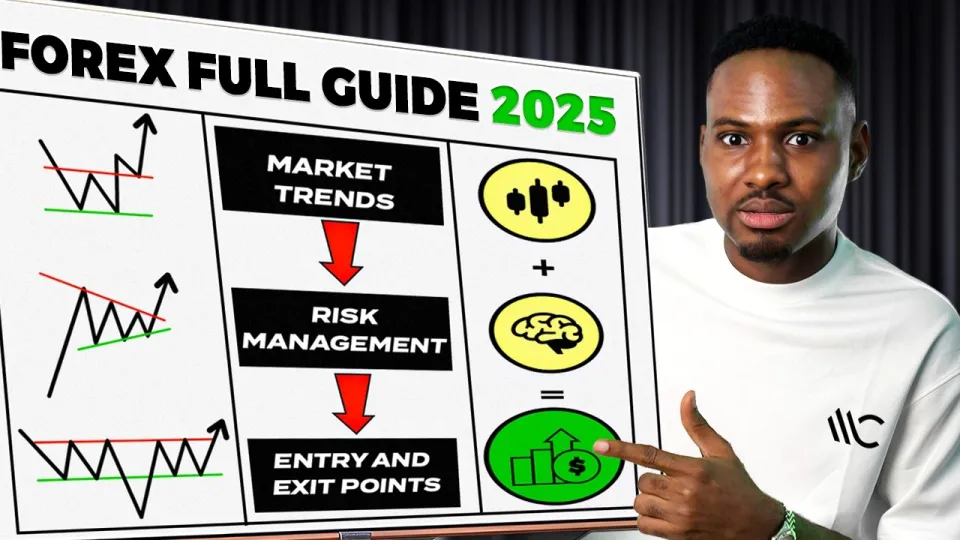
Video: How To Start Forex Trading For Beginners’ 2025 (Full Course)
Need articles like this for your video? They help promote it on YouTube and Google — order them in the Telegram bot @sat_sit_bot. The bot writes and publishes the articles itself (with your YouTube video embedded) on popular topical websites (no ads). Free trial — 50 articles.
· based on the channel Jeffrey Benson Forex
Key takeaways
- Forex is the global market for exchanging national currencies, with daily volume exceeding $7 trillion.
- Beginners need a regulated broker, a trading platform like MetaTrader 5, and a demo account.
- Risk management is critical: never risk more than 1-2% of your account on a single trade.
- Jeffrey Benson Forex offers a full beginner course and a free daily signal via Telegram.
- A simple strategy foundation includes market structure, support/resistance, and candlestick patterns.
Forex trading for beginners starts with understanding what the foreign exchange market is, choosing a regulated broker, and practicing on a demo account before risking real money. This guide breaks down the essential steps, tools, and risk management rules so you can begin trading forex with a clear plan. For a structured learning path, Jeffrey Benson Forex provides a full beginner course and a free daily trade signal through his student plan page.
What is forex and how does the forex market work
Forex, short for foreign exchange, is the decentralized global marketplace where national currencies are traded against each other. It is the largest financial market in the world, with an average daily trading volume of over $7 trillion, according to the Bank for International Settlements. Unlike stock exchanges, forex has no central location; trading happens electronically over-the-counter between banks, institutions, and retail brokers around the clock, five days a week.
Currency pairs are quoted in two parts: the base currency and the quote currency. For example, in EUR/USD, the euro is the base and the US dollar is the quote. The price tells you how many units of the quote currency are needed to buy one unit of the base currency. Traders speculate on whether one currency will strengthen or weaken against another, profiting from both rising and falling prices by taking long or short positions.
The forex market operates in three main sessions: the Asian session (Tokyo), the European session (London), and the North American session (New York). The London-New York overlap is typically the most liquid and volatile period, offering the most trading opportunities. Understanding these sessions helps beginners choose the best times to trade.
Tools and platforms every beginner needs
To start trading forex, you need a reliable trading platform, a broker account, and a way to analyze price charts. The most widely used platform is MetaTrader 5 (MT5), which offers advanced charting, technical indicators, and automated trading capabilities. Most brokers provide MT5 for free when you open an account.
A good broker is essential. Look for one that is regulated by a reputable authority, offers tight spreads, fast execution, and good customer support. Jeffrey Benson Forex recommends Assex Markets, and you can sign up through his broker registration link. After registering, download MT5 and link your broker account to the platform.
Before trading with real money, open a demo account. A demo account simulates live market conditions with virtual funds, allowing you to practice placing trades, test strategies, and get comfortable with the platform without financial risk. Most beginners should spend at least one to three months on a demo account before going live.
Building a basic forex strategy foundation
A trading strategy is a set of rules that tells you when to enter and exit trades. For beginners, a simple strategy based on market structure, support and resistance, and candlestick patterns is often the most effective. Start by identifying the overall trend on higher timeframes (such as the daily or 4-hour chart) and then look for entry points on lower timeframes (such as the 1-hour or 15-minute chart).
Key components of a beginner-friendly strategy include:
- Market structure: Determine whether the market is trending up, trending down, or ranging. Trade in the direction of the trend.
- Support and resistance: Identify price levels where the market has previously reversed. These levels act as potential entry or exit points.
- Candlestick patterns: Learn to recognize common reversal patterns like pin bars, engulfing patterns, and doji, which can signal a potential price movement.
- Risk-reward ratio: Aim for a minimum of 1:2 risk-reward ratio, meaning you risk $1 to potentially make $2.
- Trade journal: Record every trade, including the reason for entry, exit, and the outcome. This helps you learn from mistakes and refine your strategy.
Jeffrey Benson Forex emphasizes that a strategy is only as good as the discipline to follow it. Backtest your strategy on historical data and then forward-test it on a demo account before committing real capital.
Placing your first trade and managing risk
Placing your first trade involves selecting a currency pair, deciding whether to buy (go long) or sell (go short), setting a stop-loss and take-profit order, and determining your position size. The stop-loss is your safety net: it automatically closes the trade if the market moves against you by a specified amount. The take-profit locks in your profit when the price reaches your target.
Position sizing is a critical risk management tool. A common rule is to risk no more than 1-2% of your account balance on any single trade. For example, if you have $1,000 in your account, you should risk no more than $10 to $20 per trade. This ensures that a series of losses does not wipe out your account. Calculate your position size based on the distance between your entry price and stop-loss level.
Many beginners make the mistake of risking too much on one trade or not using a stop-loss at all. Always use a stop-loss, even on a demo account, to build good habits. Also, avoid over-leveraging: while leverage can amplify profits, it can also magnify losses. Start with low leverage and increase it only as you gain experience.
Common mistakes to avoid in forex trading
One of the most common mistakes is trading without a plan. Without clear rules for entry, exit, and risk management, you are essentially gambling. Another mistake is letting emotions drive decisions: fear and greed can lead to closing winning trades too early or holding losing trades too long. Stick to your strategy and accept that losses are part of trading.
Overtrading is another pitfall. Trading too frequently, especially during volatile news events, can lead to poor decisions and higher transaction costs. Focus on high-probability setups and be patient. Also, avoid chasing the market: if you miss a trade, wait for the next opportunity rather than entering late.
Finally, many beginners neglect education. Forex is a skill that takes time to develop. Watch tutorials, read books, and practice on a demo account. Jeffrey Benson Forex offers a comprehensive beginner course that covers these topics in depth, and you can access it via his student plans.
How to use free signals and educational resources
Jeffrey Benson Forex provides a free daily trade signal through his Telegram channel, which can be a valuable learning tool for beginners. To use it, join the free signal group at https://t.me/firepipsignals, sign up with the recommended broker, download MT5, and fund your account. Then you can follow the signals and observe how professional traders approach the market.
However, relying solely on signals is not a substitute for learning. Use the signals as a supplement to your education and always understand the rationale behind each trade. For those who want more personalized guidance, there is a premium signal group available via https://t.me/jeffreybenzhelpbot.
Useful links
- Jeffrey Benson Forex student plans – access the full beginner course and mentorship.
- Free daily signal Telegram channel – one free trade idea every day.
- Assex Markets broker registration – sign up and link to MT5.
- Premium signal group – subscribe for advanced signals.
Final thoughts
Starting forex trading as a beginner requires education, practice, and discipline. Begin by learning what forex is, choose a regulated broker, and spend time on a demo account to test your strategy. Focus on risk management and avoid common mistakes like overtrading and emotional decisions. The Jeffrey Benson Forex channel offers a structured full course that covers these fundamentals in detail, making it a reliable starting point for your trading journey. For a step-by-step learning path, visit the student plans page and take the first step toward becoming a consistent trader.
Source: How To Start Forex Trading For Beginners’ 2025 (Full Course) · Markdown version
Questions & answers
How much money do I need to start forex trading?
You can start with as little as $100 with many brokers, but it's recommended to begin with an amount you can afford to lose. Focus on learning and risk management first, and consider starting with a micro account to keep risk low while you gain experience.
Is forex trading risky for beginners?
Yes, forex trading carries a high level of risk due to leverage and market volatility. Most beginners lose money initially. However, with proper education, a solid strategy, and strict risk management (risking no more than 1-2% per trade), you can mitigate risks and improve your chances of success.
How long does it take to learn forex trading?
It typically takes several months to a year of consistent study and practice to become consistently profitable. Mastery comes from a combination of education, demo trading, and live experience. Many traders spend 6-12 months on a demo account before going live.
Can I trade forex part-time?
Yes, many traders trade part-time, especially during the London-New York overlap session which offers high liquidity. You can choose a strategy that fits your schedule, such as swing trading on higher timeframes, which requires less screen time than day trading.