How to Trade Meme Coins in 2026 Without Losing Your Capital to Emotion
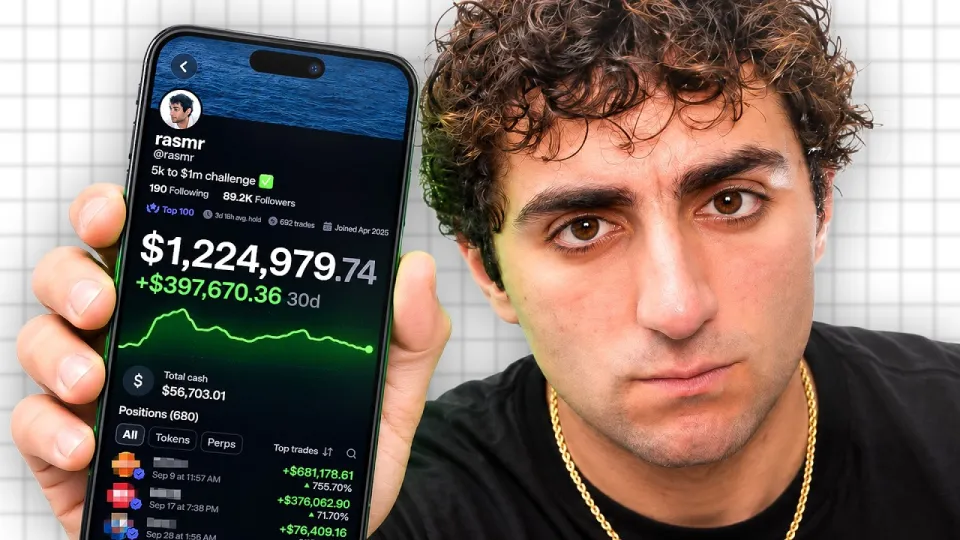
Video: 5 Years of Memecoin Knowledge in 12 Minutes
Need articles like this for your video? They help promote it on YouTube and Google — order them in the Telegram bot @sat_sit_bot. The bot writes and publishes the articles itself (with your YouTube video embedded) on popular topical websites (no ads). Free trial — 50 articles.
· based on the channel rasmr
Key takeaways
- Meme coins are narrative-first assets: price follows attention, not cash flow, so the story matters more than the chart pattern.
- Exit planning beats entry timing: decide your sell levels by market cap before you buy, because most launches distribute to early wallets.
- Emotion is the main cost center: revenge buying after a loss and round-tripping a 50–100% gain are the two most common ways traders give profit back.
- Position sizing is the real risk control: small fixed bets on many ideas survive; one oversized bet on a single ticker usually does not.
- The rasmr breakdown frames five years of meme coin lessons in 12 minutes, with a trading community linked at https://discord.gg/catalystfnf.
A meme coin is a cryptocurrency whose value is driven almost entirely by narrative, community attention and liquidity rather than by revenue or protocol fundamentals, which means trading it is a discipline of reading stories and managing exits instead of valuing a business. The practical approach for 2026 is to research the narrative and the launch, set market-cap-based exit levels before buying, size positions small, and treat emotion as the single largest risk in the trade. Traders who want to follow live discussion of these setups can register through the fomo trading platform, where the channel's community activity is hosted.
What a meme coin actually is and why the narrative leads
A meme coin is a token launched cheaply and quickly, usually with no product, whose price depends on how many people believe the story and how long that belief lasts. That structure produces a specific behavior: the asset can multiply in hours on pure attention and collapse just as fast when attention moves to the next ticker. Unlike a token with fees, staking or governance, there is nothing underneath to slow a decline.
This is why experienced traders look at three things before anything else:
- Who launched the token and what narrative it attaches to — a cultural moment, a public figure, an animal, a political event, a game release.
- How the supply is distributed — how much sits in a handful of wallets that could sell into every rally.
- How much liquidity exists — thin pools mean your own exit moves the price against you.
A recognizable narrative does not make a token safe, but an unrecognizable one makes it unsellable. In meme coin trading, the story is the product.
Five years of meme coin lessons compressed into one framework
The rasmr video "5 Years of Memecoin Knowledge in 12 Minutes" condenses a long trading history into a repeatable checklist rather than a list of tickers, and the framework holds up because the market structure behind meme coins has not changed even as the coins have. Launches still front-run public buyers, early wallets still distribute into strength, and retail still arrives at the top of the curve because that is when the chart looks most convincing.
The checklist that survives across cycles looks like this:
- Narrative first. Identify what the coin is selling emotionally before you look at the chart.
- Launch mechanics second. Know whether insiders hold most of the supply and whether the liquidity is locked.
- Market cap third. Judge the price against realistic ceilings for comparable launches, not against how good the chart looks.
- Exit plan fourth. Write down the market caps at which you will sell portions before you enter.
- Size last but permanently. A good idea with a bad position size is still a loss.
Planning exits by market cap instead of by feeling
Exit planning is the part of meme coin trading that separates a profitable cycle from a round trip, and it works best when you decide sell levels in market cap terms before you buy. Market cap is the number that tells you how much money would have to enter the token for your position to double, and at some point that number becomes implausible for the narrative on offer.
A workable structure for a speculative position:
- Define the entry market cap and the market cap you believe the narrative can realistically reach.
- Sell a portion into the first strong move rather than waiting for the full target.
- Keep a runner only if the community and volume are still growing, and accept that the runner can go to zero.
- Never move your sell levels upward because the chart is green; that is how 50–100% gains turn into break-even.
Viewers of the breakdown repeatedly describe the same failure: holding a large unrealized profit and not selling, then watching it evaporate. The lesson is mechanical, not psychological — a written exit ladder removes the decision from the moment when judgment is worst.
Why emotion is the most expensive input in meme coin trading
Emotion is the dominant cost in meme coin trading because these assets are designed to produce excitement at exactly the wrong moment, and the most common losses come from two predictable patterns. The first is hoping a losing chart will recover and selling only after the loss has doubled. The second is greed on a winner, where a position already up 50–100% is held for more and gives everything back.
Practical countermeasures that traders actually report working:
- Trade with money whose loss does not change your month.
- Pre-commit to a maximum loss per idea before entering.
- Take screenshots of your exit plan so the plan, not the chart, is in front of you.
- Stop trading for the day after a loss instead of immediately looking for a recovery trade.
- Track results in a simple log: entry market cap, exit market cap, reason for exit.
New traders in their first month are the most exposed, because they learn the mechanics of launches and market caps with real money. Starting small is not a limitation; it is the only way to survive long enough to build skill.
Common questions traders ask before their first meme coin position
Most recurring doubts about meme coins fall into a few recognizable categories: how much to risk, when to sell, whether a specific themed token is a good bet, and how to spot a launch that will rug. Each has a practical answer that does not require predicting the future.
- How much capital? An amount small enough that a total loss does not affect your portfolio or your decision-making.
- When to sell? At the market caps you set before entry, in portions, regardless of how the chart feels.
- Is this themed coin a good investment? Any single themed token — a game release tie-in, a celebrity, a cultural event — is a bet on attention, so size it as a lottery ticket rather than a core holding.
- How do I spot a rug? Look at wallet concentration, unlocked liquidity and whether the launch was announced privately before it was public.
A recurring theme in community discussion is the idea of an inner circle that hears about launches early. Whether or not such groups exist, the implication for everyone else is the same: public buyers are usually the exit liquidity, so entries must be priced accordingly.
Where to follow the discussion and the tools behind it
Following a community is not a substitute for a plan, but it shortens the learning curve because you see how other traders reason about launches in real time. The rasmr channel pairs its breakdowns with a trading group at https://discord.gg/catalystfnf, where setups and market-cap levels are discussed, and with the fomo platform linked in the video description for execution.
Use these resources as context, not as signals. The value of watching experienced traders is in how they size positions and where they take profit, not in the tickers they mention.
Final thoughts
Meme coin trading rewards process over prediction, and the process is short: understand the narrative, check who holds the supply, set market-cap exits before entry, and keep every position small enough that a zero does not hurt. The failure modes described by traders — round-tripping gains, averaging into losers, chasing green candles — are all failures of pre-commitment rather than of analysis. The rasmr breakdown is a useful compressed reference for that process, and if you want to trade alongside the community, you can start with registration on fomo.
Source: 5 Years of Memecoin Knowledge in 12 Minutes · Markdown version
Questions & answers
How much money should a beginner put into a meme coin?
Only an amount you can lose entirely without changing your finances or your mood. New traders typically do best with several small positions rather than one large one, because the goal in the first months is learning how launches, liquidity and market caps behave, not maximizing a single outcome.
When should I sell a meme coin that is already up a lot?
Sell in portions at market caps you defined before buying, and do not raise those levels just because the chart is rising. Many traders describe watching a 50–100% gain disappear because they waited for more; a written exit ladder removes that decision from the emotional moment.
How can I tell if a meme coin is likely to rug?
Check how much supply sits in a few wallets, whether liquidity is locked, and whether the launch was shared privately before it went public. High concentration plus unlocked liquidity plus a pre-announced launch is the classic combination that leaves public buyers holding the bag.
Is a themed coin tied to a game or celebrity a good investment?
Treat it as a bet on attention rather than a long-term holding. Such tokens can move fast while the narrative is fresh, but they have no cash flow to support a price once interest fades, so position size should reflect a realistic chance of going to zero.